- October 26, 2025
- Editor
- 0
Words & Pics – Danielle Carstens
Have you ever experienced deafening silence? It was the first thing I noticed when stepping off the plane. “It’s just otherworldly,” we uttered repeatedly as we drove to the lodge — and many times in the days that followed. Sandy plains, rocky outcrops of ancient volcanic material, and then, suddenly — wildlife. Elephants, lions, springbok, and many more.
This is the Skeleton Coast, on the west coast of Namibia, in the remote and rugged Kaokoland region. Despite its remoteness, it remains a dynamic, living wilderness where every creature has learned to endure the extremes. Beneath its eerie, inhospitable reputation lies a vibrant ecosystem, shaped by the relentless forces of the Atlantic Ocean and the Namib Desert. Life here has always found a way to adapt.
We were based 50 kilometers inland from the coast, near the Hoanib River. The riverbed is dry for most of the year, but underground water sustains lush vegetation along its course, providing essential resources for the region’s desert-adapted wildlife. Elephants, oryx, giraffes, and springbok are plentiful. However, brown hyenas, lions, and cheetahs also roam these vast spaces, though they cover enormous territories. The Skeleton Coast National Park alone spans 16,845 square kilometers, but the wildlife is not confined to the park — they roam freely across the landscape.
This place is a photographer’s dream. As photographers, we’re always searching for something unique, and this is most definitely the place to find it. Large elephants dwarfed by the vast landscapes. Deep shadows creating dramatic, low-key backgrounds. Giraffes striding across the desert. A desert lioness prowling against a rocky, textured backdrop. Backlit dust swirling in the golden light. Patterned dunes in early morning light. It’s all possible, and we experienced it all in just four days.
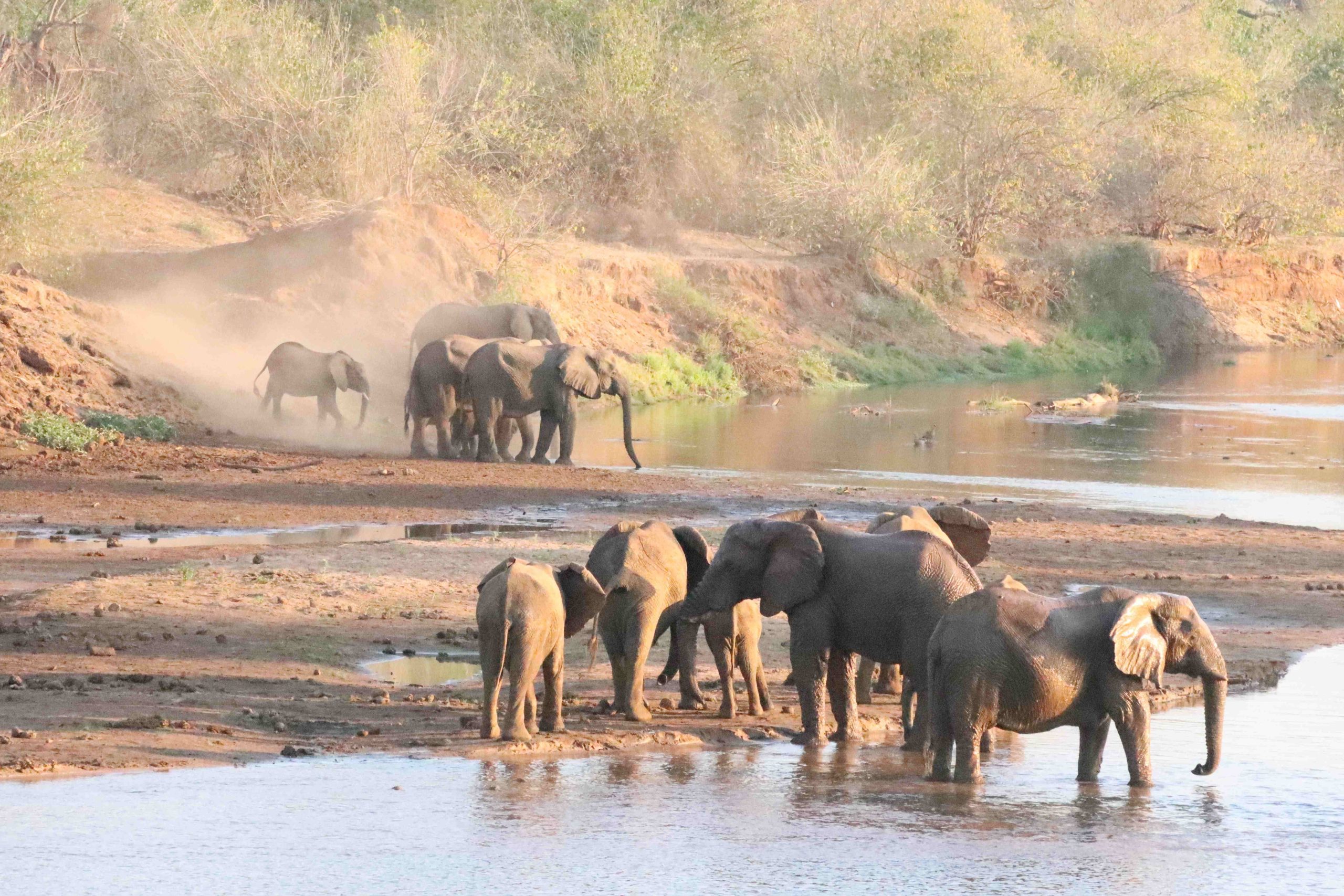
We were thrilled to see not only elephants in peak condition but also a significant number of calves. Their playful antics kept us clicking away, making them a highlight of every game drive. Although I can’t single out one sighting as the best, stumbling upon an African wildcat after sunset one evening is definitely high on the list. Shy and elusive, it made its way quickly across the open plain and vanished into the darkness.
These are the moments most photographers dream of. However, as much as I enjoyed capturing it all on camera, it was the non-photographic experiences that are solidly etched into my memory. Early one morning, long before sunrise, I was awakened by a sound I couldn’t identify. Despite years spent in the African wilderness, this was foreign to me — an eerie, guttural sound that echoed through the hills, breaking the dark desert silence. Convinced that some unfortunate creature was being suffocated by a predator, I stepped onto my porch and shone my flashlight in the direction of the sound, too curious to ignore it. Nothing. After recording a short snippet of the noise on my phone, I looked up at the endless stars, inhaled the crisp desert air, and felt an overwhelming sense of gratitude for the privilege of being so deeply immersed in one of Africa’s most remote areas.


The mystery of the eerie sound was solved a few days later when I met Emsie Verwey, the resident brown hyena researcher at Wilderness Hoanib Skeleton Coast Camp since 2014. Known to the staff as ‘The Hyena Mom,’ she was intrigued the moment I played her the sound clip. When did we hear it? How long did it last? It turned out to be brown hyenas fighting — a fairly rare occurrence. As camp discussions unfolded, I realised I was the only one who hadn’t heard the chaotic commotion on the second night. This time, the brown hyenas had fought more aggressively, keeping nearly everyone in camp awake for hours. I was disappointed to have missed out! While the hyenas remained elusive in terms of sightings, their nighttime antics were unforgettable.
Another special encounter occurred at dinnertime when we received a visit from a Cape fox. Seated around the campfire beneath a canopy of brilliant stars, we noticed movement just beyond the circle of light. Out of the darkness, a small Cape fox hesitantly emerged, edging closer. The only true fox species native to Southern Africa, it was a privilege to see one so close. If it had been hoping for dinner scraps, it was out of luck and soon disappeared back into the night.
On our second-to-last evening, we stopped for sundowners, and I asked the guide, “What time is it now? I’m guessing around 18:30?” He laughed, clearly familiar with this misjudgment. “It’s almost 20:30.” We couldn’t believe it. The sun had only just dipped below the horizon, and the beautiful blue hour was in full swing. Being on Africa’s west coast in January, the summer sunsets arrive late and make for full, sunny days. The nights were comfortably cool in the desert, even in the middle of summer.
The only other time the guide laughed at a question was when I asked about rain. “Rain…” he repeated with a shy smile, gazing over the parched landscape and shaking his head. “That’s not something well-known here.” And that’s the beauty of this mysterious place. It’s a survival game, and everything here is a master at it. It’s raw nature at its finest. It’s the sensation of being so far removed from civilisation that it feels other-worldly. It’s the warm welcome from locals in a seemingly inhospitable environment, yet you feel as if you’ve returned home to a place, you’ve always known. It’s the haunting calls of hyenas echoing through the hills at 5 a.m. It’s a sky so clear that a million stars and galaxies you’ve never seen reveal themselves in breathtaking clarity. It’s a glimpse into the simplicity of life. It’s an experience that will change you forever.
Essentials:
Getting there:
Several International airlines fly into Windhoek including South African Airways
Wilderness Hoanib Skeleton Coast Camp – https://www.wildernessdestinations.com/