- September 30, 2025
- Editor
- 0
Words & pics – Tessa Buhrmann
There’s a point on the long, scenic drive north from Windhoek when the Namibian horizon begins to stretch wider and the air grows tangibly quieter. It’s late afternoon by the time we turn off the long tarred road to Onguma Private Game Reserve, located just outside Etosha National Park, for a night at Onguma Tented Camp before heading deeper into the wild.
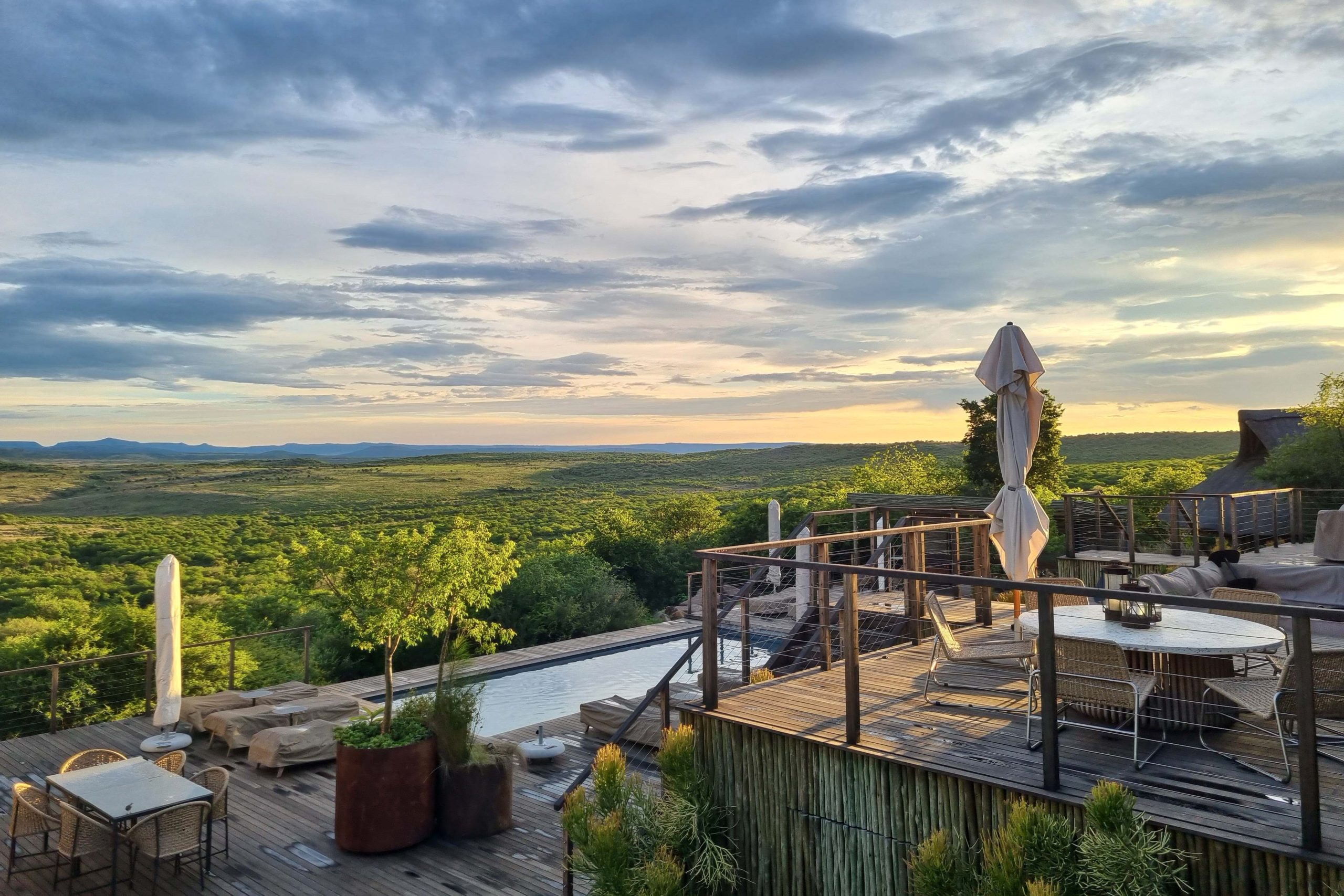
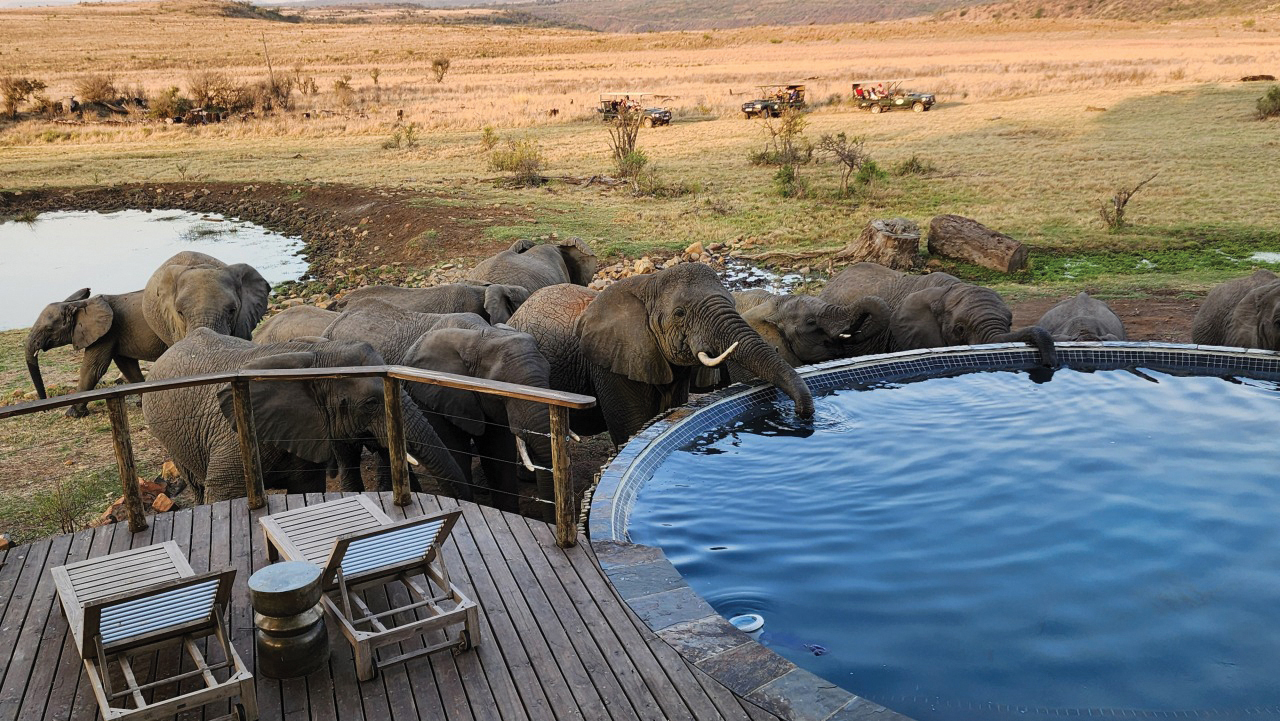
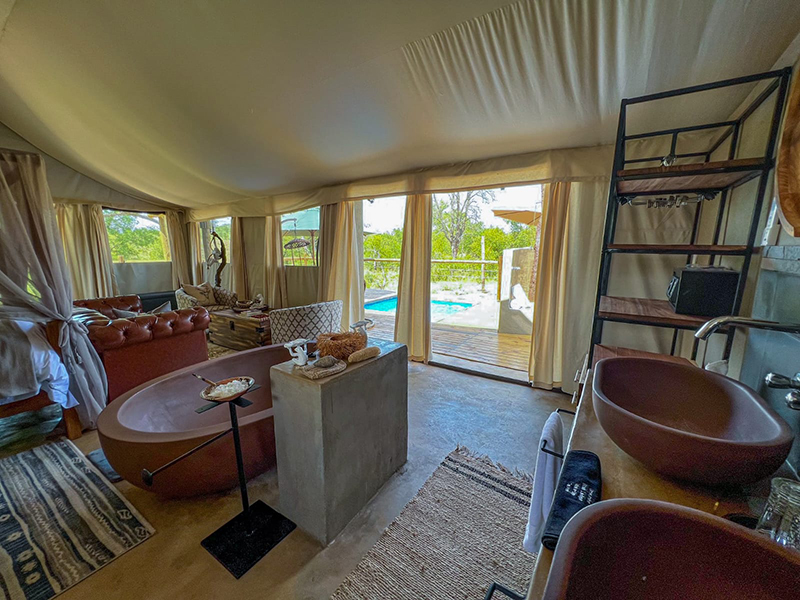
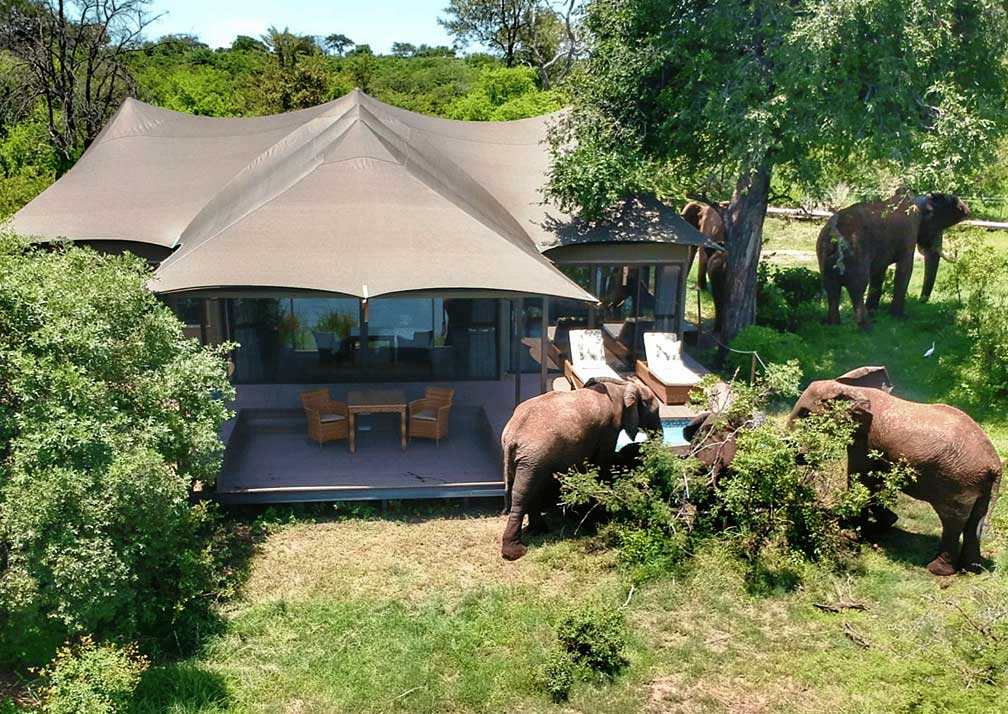
Onguma Tented Camp is as much about sophisticated style as it is about earthy connection. With its stylish interiors, rim-flow pool, and views over a busy waterhole, it’s the kind of place that invites you to slow down and savour. We do just that, and after the quintessential safari drink – a chilled G&T – we enjoy a long, lazy evening of five-star dining and wonderful conversation beneath a star-studded sky.


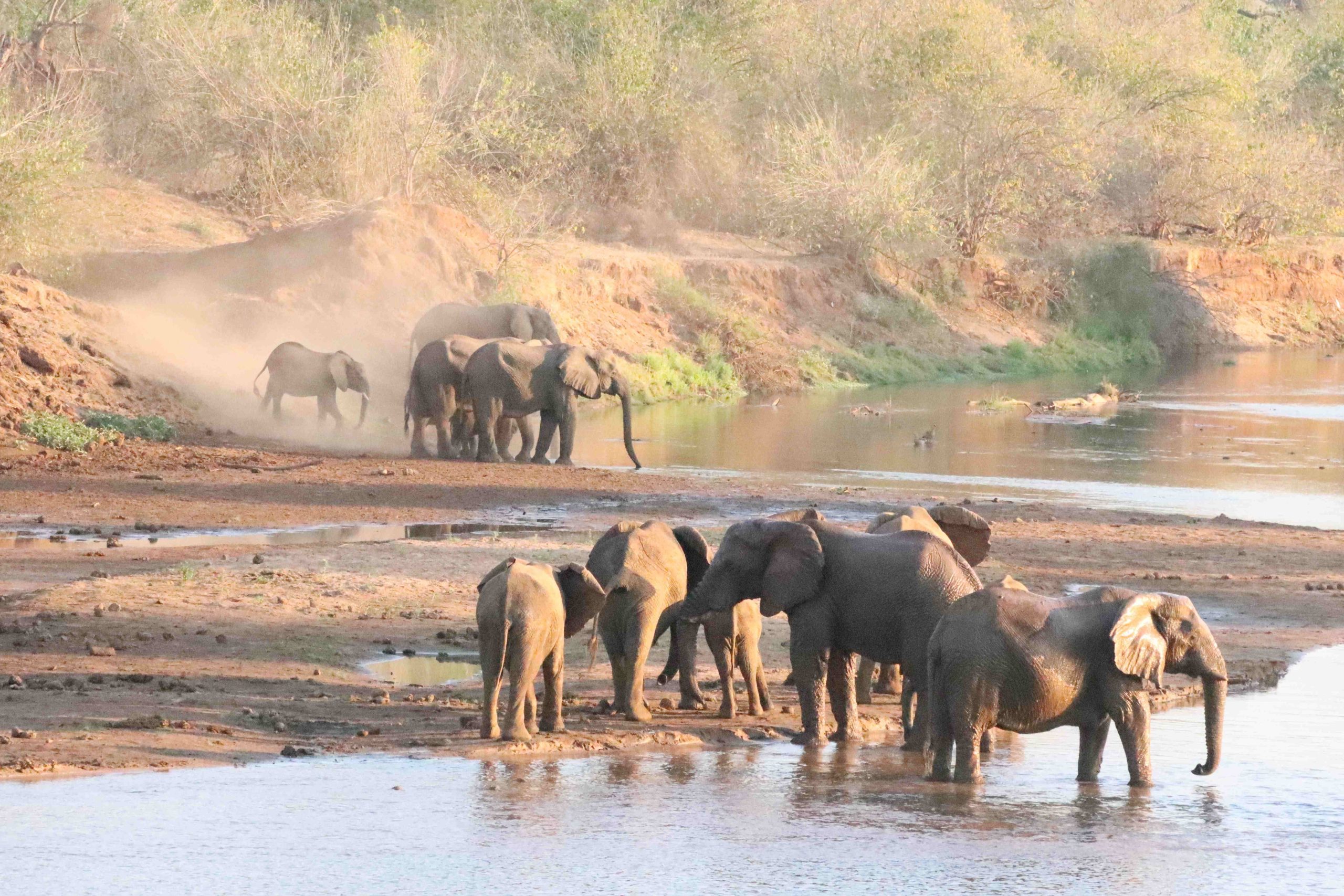
After a night immersed in safari serenity, we set off early to explore Etosha National Park. A few hours’ drive through this vast landscape of shimmering salt pans surrounded by lush green grasses, wildflowers, and acacia trees yields sightings of zebra, springbok, wildebeest, and oryx, as well as a breeding herd of elephants and an abundance of birds.
Shortly after midday, we drive into Onguma Forest Camp — our guides Liberty and Victor are there to meet us… our Trails Camp experience has officially begun.
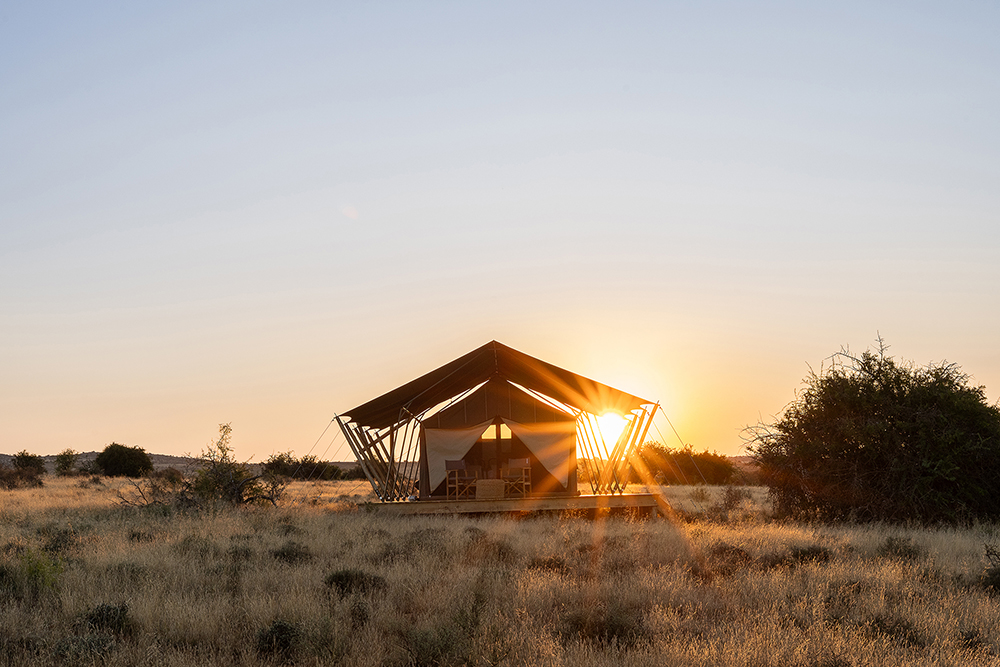
After a short transfer deeper into the reserve, we arrive at Onguma Trails Camp, a seasonal, solar-powered, off-grid camp set within a treed grassland in a rehabilitated area of the 34,000-hectare reserve, and Namibia’s first true walking safari experience in big game territory. Thoughtfully chosen for its biodiversity and suitability for walking, this part of the reserve is thick with old trees and thriving vegetation. The camp itself is intimate and considered: accommodating just eight guests in four canvas bell tents, each thoughtfully designed with extra-length beds, private outdoor bathrooms, and a wood-fired hot tub from which to absorb the wilderness in warmth and silence. The bucket shower is the perfect bush indulgence, adding just the right splash of adventure to the comfort Onguma is known for.
Our tent sits beneath a large Acacia tree (now named the Vachellia species), its shade offering reprieve from the afternoon sun. Appreciating the well-placed camp chairs, I watch a pair of Meyer’s parrots as they forage in the bark before vanishing into a nest cavity — it’s the perfect place to pause and breathe.
After a light tapas-style lunch in the open-air mess tent, we set off for a late-afternoon sundowner drive to acquaint ourselves with the terrain we’ll be walking through the next morning. The grasses shimmer in the golden light, and the wispy clouds turn from pale apricot to the colour of squished plums. Dinner back at camp is hearty and flavourful: a three-course celebration of fire-grilled meats, fresh vegetables, and delicious braai-broodjies — essentially toasted sandwiches cooked over the coals. Delicious!
Morning begins before dawn, with a quiet wake-up call followed by coffee and rusks around the fire. We set off just as the sun’s first rays brush the tops of the trees, with Liberty and Victor leading us on a 6–8 km walk through dry riverbeds and open plains. Within minutes, Liberty draws our attention to the trail of an oryx, a deep furrow in the dust where it has bolted, disturbed by our presence. His enthusiasm is infectious. “You can tell he was startled,” he says. “Look how wide the stride becomes. That’s when he took off.”


As we move quietly through the landscape, the bush comes alive with stories. A set of freshly disturbed aardvark tracks near an active burrow. Scat, neatly buried. “He hides the evidence,” Victor explains. “Doesn’t want to be found. He’ll patrol about two kilometres from here.”
We learn that ants build two-hole entrance to prevent rain from flooding their nests, and that a favourite snack of the African Grey Hornbill is the armoured cricket, one of which Liberty scoops up to show us. Victor stops, there’s a boomslang curled on top of a Grewia bush, waiting for a bird to make the wrong move. We sidestep, giving it the respect it deserves. “Closest we’ve come to danger,” someone whispers.
We learn how the San people use poison apple plant sap on arrowheads, and that chewing leadwood leaves and swallowing the juice helps with severe stomach aches. Liberty, whose grandmother is Damara, tells us she makes a delicious sour plum jam using the small fruit of the sour plum tree, and that it’s also known for treating dysentery. “But don’t ask her for the recipe,” he laughs. “It’s a family secret.”
Not to be outdone, Victor shares the significance of the sandpaper raisin tree, from which the sturdy knobkerries (fighting sticks) are made. “You never touch your grandfather’s stick,” he tells us, reverently. “That’s where his power is.”
As the sun climbs higher, we pause for a scenic bush breakfast under the shade of a large tree — eggs, muesli, and bread cooked on an open flame — before returning to camp for rest and a lazy afternoon in the shade.
Later that afternoon, during our sundowner drive, we watch as a lioness crouches low in the grass, eyeing a herd of wildebeest. One of them spots her. There’s a pause. Then, to our amazement, the herd, about fifteen strong, turns the tables, closing in on the lioness. She stands up slowly and, with all the regal nonchalance of a queen deciding not to make a fuss, retreats into the bush. Drama on the African plains.

That night, we dine under canvas in the stretch-tent mess area, sharing a hearty meal and stories around the fire. The camp is beautifully still. No Wi-Fi, no mobile signal. Just the hiss of the fire, the occasional call of a nightjar, and the sound of quiet contentment.
As we discover the next morning, a bush walk is not just about the little stuff. We come across a group of giraffe and watch quietly, while soon becoming the watched — they peer at us, ever curious, but without losing their caution. Back on the path, we come across the distinct pug marks of a leopard, still fresh, likely from a female. A few hundred metres further, we find the shallow indentation in the grass where she has curled up to rest. The thought of her watching us silently from the thickets sends a thrill down my spine.
We skirt the thick bushes and head into the long grass. It’s soft to the touch, but as Victor shows us, easily capable of slicing the skin when pulled sharply, something to be mindful of. Walking quietly in single file, our peace is disturbed as a guinea fowl explodes from the undergrowth, and my heart leaps. “Heart-attack bird,” Liberty chuckles.
We move silently through a dense stretch of mopane woodland, tracking elephants. Broken branches, plenty dung, and scuffed earth tell us they are here recently, likely just the afternoon before. Every snapped twig or shift in the breeze heightens our awareness, even the bush seems to be holding its breath. Liberty points out signs of recent rhino activity, and the realisation that both giants may still be nearby sends a ripple of adrenaline through the group. It’s a thrilling reminder that out here, we are guests in their domain.
Back at camp, a lazy afternoon beckons. Some doze in their tents, others soak in their hot tubs or lounge in the communal area with a good book. I watch the Meyer’s parrots again, feeling utterly content.
That evening, our boma dinner is accompanied by stargazing and conversation. Over a local Namibian gin and tonic, Liberty shares his philosophy on bush walks: “They need to be enjoyable, educational, and memorable. We don’t just look for safety for the guests, but for the comfort of the animals too. This is their home first.”
We’d seen signs of change in the reserve, old farm fences that had only recently come down. Tracks of herbivores, and evidence that predators are beginning to return. “Elephants will help clear this thick bush eventually,” Victor muses. “But already, this place is healing.” And so are we, I think to myself.
As we pack to leave, I linger a little longer beneath our tree. In Herero, the word Onguma means ‘the place you don’t want to leave.’ Trails Camp embodies that sentiment completely. It’s more than a camp, it’s an invitation to walk in quiet reverence, to learn from the land, and to witness nature on its own terms.
And while Onguma Tented Camp may be safari chic at its finest, out at Trails Camp, with dust on my boots and the call of a Meyer’s parrot overhead, I discover something richer still: connection.