In Zambia’s South Luangwa Valley, conservation, tourism and community development are deeply interconnected. WORDS Victoria Foord & Kim Barnett
In the remote Luangwa Valley of eastern Zambia, the Luangwa River curves through a landscape of towering ebony trees, open grasslands and seasonal lagoons alive with birds and teeming with wildlife. It’s a place known for its remarkable sightings and for pioneering the walking safari. This is South Luangwa National Park, where people and nature live side by side, and where tourism has become a powerful force for both community and conservation.
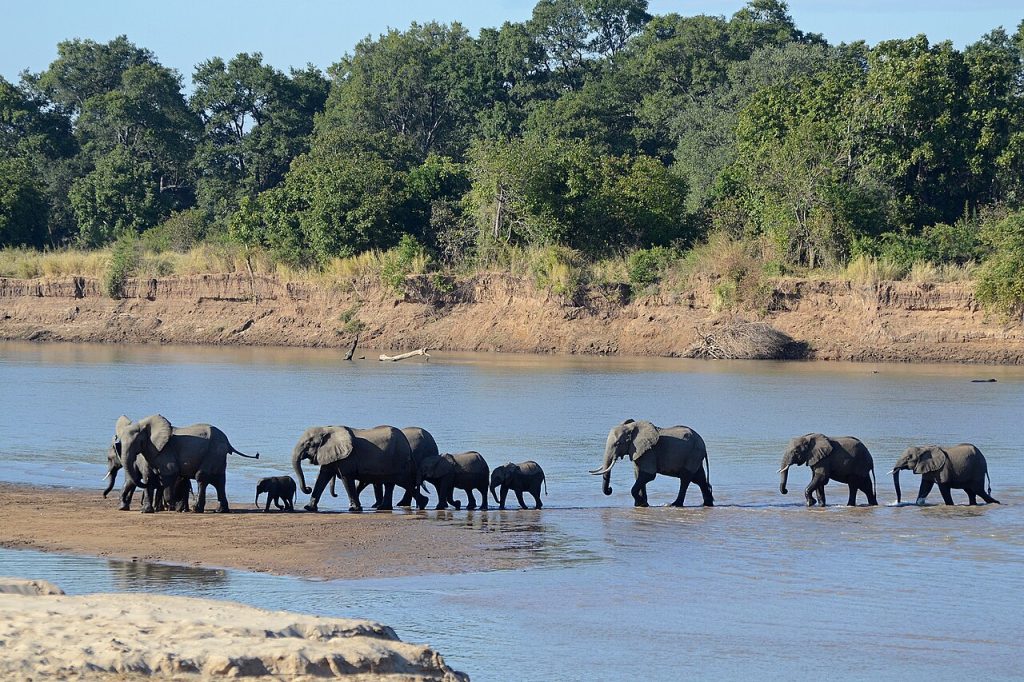
Beyond the visitor experience lies a conservation framework that genuinely works. The same environment that draws safari-seekers from around the world is home to rural communities whose livelihoods and future prospects are closely tied to the health of the land and its wildlife.
At Conservation South Luangwa (CSL), conservation and community development are inseparable. Responsible tourism plays a central role in sustaining both, and the Luangwa Conservation & Community Fund (LCCF) demonstrates how this relationship can work in practice.
LCCF member lodges create jobs and deliver high-quality tourism experiences while contributing to conservation and community initiatives through a per-person bed night levy. Launched in 2011 thanks to Andy Hogg and other community-focused leaders, the LCCF raises hundreds of thousands of dollars annually for four core non-profits: Conservation South Luangwa, Zambian Carnivore Programme, Chipembele Wildlife Education Trust and Project Luangwa.
In 2025 alone, CSL received more than USD 160,000 in vital unrestricted funding through its ten LCCF member lodges.
Through the LCCF, funds contributed by safari operators and lodges help equip wildlife rangers, support rapid responses to human-wildlife conflict and strengthen local capacity for coexistence.
For communities living alongside wildlife, these benefits are practical and visible. Wildlife becomes a source of opportunity rather than a distant conservation ideal. At the same time, healthy ecosystems and secure wildlife populations make South Luangwa an even stronger safari destination.
Initiatives such as Project Luangwa demonstrate how tourism demand for cultural experiences and crafts can generate sustainable income streams. These programmes support skills development and employment, particularly for women and young people, helping to build resilient local economies.
This kind of sustained collaboration reflects a growing understanding across the region that tourism delivers its greatest value when conservation and community benefits are built into the core business model.
Conservation South Luangwa and Project Luangwa are among the first vetted Community and Conservation Partners in Africa’s Eden Tourism’s Community and Conservation Network, an open-source platform linking tourism businesses with credible grassroots organisations.
Organisations listed must be formally registered, financially transparent and able to demonstrate measurable impact, giving tourism partners confidence that their support reaches the destinations.
As travellers increasingly seek meaningful experiences, South Luangwa is a shining example of how tourism can benefit all. Partnerships between locally led NGOs, conservation organisations, tourism operators and networks such as Africa’s Eden help ensure that destinations like South Luangwa remain wild while communities can be secure and benefit.
In South Luangwa, responsible tourism is not an abstract idea. It is a tried and tested, long-standing system that continues to evolve through collaboration and shared commitment.