
It’s eight o’clock and I’ve just woken up with a mug of coffee in hand. From the private balcony of my suite at Morukuru Beach Lodge, I have a 180-degree view of the Indian Ocean. Wherever I look, I see the large grey forms of whales dotting the sea. It’s a heart-stopping sight.
There’s not much action right now, just a few spy-hops as the whales lift their heads to look around, but even in the stillness, I can feel them – a powerful presence beneath the waves. Between the ocean and I stretches a vast garden of fynbos and rolling white dunes, the landscape that defines the De Hoop Nature Reserve, a World Heritage Site celebrated for its birds, wildlife and the extraordinary shrubland of the Cape Floral Kingdom.
The ocean here is part of a Marine Protected Area that extends five kilometres out to sea, home to over 250 fish species and, between June and November, hundreds of southern right whales. These gentle giants migrate from the icy Antarctic to these warmer waters each winter to calve and nurse their young.
I first fell in love with this wild coastline while doing the De Hoop Trail’s Vlei to Whales walk, and I’ve returned now to experience a weekend at Morukuru Beach Lodge – a five-suite eco-luxury hideaway located at Koppie Alleen, part of the Morukuru Family collection of private lodges.
We left Cape Town on a Friday morning, taking a slow three-hour drive through the rolling farmlands and quaint rural towns of the Overberg – Caledon, Napier and Bredasdorp – past fields of canola and wheat, framed by the purple mountains towards Hermanus. As we neared the reserve, windmills and grazing livestock gave way to fynbos, dunes and sea.
De Hoop, known as the “Jewel of the Cape”, spans 36 000 hectares and is home to more than 1 500 plant species, 260 bird species and a wealth of wildlife, from bontebok and eland to Cape mountain zebra, ostriches and baboons. Its 70 km coastline and saline wetland is on the Ramsar List of Wetlands of International Importance to birds.
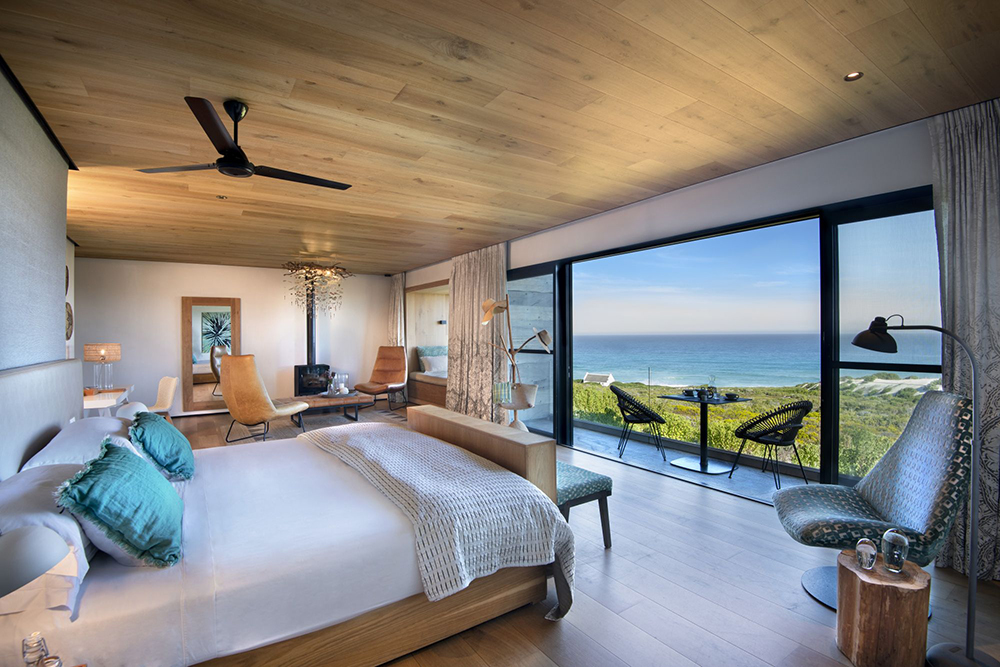
At the lodge, we were welcomed with warm smiles and a refreshing drink before checking into our room and then heading to the outdoor dining area beside the pool for lunch. Chef Pieter Brown served a fresh beetroot and spekboom salad with Morukuru’s own honey dressing, followed by perfectly grilled local fish.
Morukuru Family was founded by Dutch couple Ed and Anka Zeeman, whose African safari to Kenya in the 1990s inspired a lifelong commitment to conservation and community. After creating exclusive-use lodges in the Madikwe Game Reserve, they expanded to De Hoop and Johannesburg, guided by their ethos of sustainability and local sourcing.
Nearly all the lodge’s ingredients come from within 100 km – vegetables from Villiersdorp, craft beer and gin from Swellendam, fish from Struisbaai, meat from Bredasdorp and cheeses from Stonehouse Farm in Stanford.
Chef Pieter, who, among other top spots, has worked at Grootbos and Babylonstoren, describes his style as “African cooking using seasonal, raw, original flavours.” A keen forager (outside the protected reserve), he incorporates fynbos, buchu, wild sage and dune spinach into his menus, creating a true taste of place.
Morukuru’s eco-friendly design, by architect Nick Plewman and Dutch interior designer Janine Feikes-Butter, mirrors the natural environment. Built from regional sandstone and organic materials, with floor-to-ceiling glass framing endless ocean views, it blends seamlessly with its surroundings.
That afternoon, after a rest in our sumptuous bedroom, we met our guide Marizelle Brand for an evening stroll to the dunes. Guests are paired with a guide for their stay, ensuring a personal connection with the land. We tried our hand at sandboarding before settling into the soft sand for sundowners, watching whales spout in the distance and a lone eland graze below.
The whales were never far away, their breath rising in misty spouts across the bay. Marizelle told us some arrive as early as May, travelling 10 000 km from the Antarctic to calve, with as many as 1 200 mother-and-calf pairs recorded in the reserve.
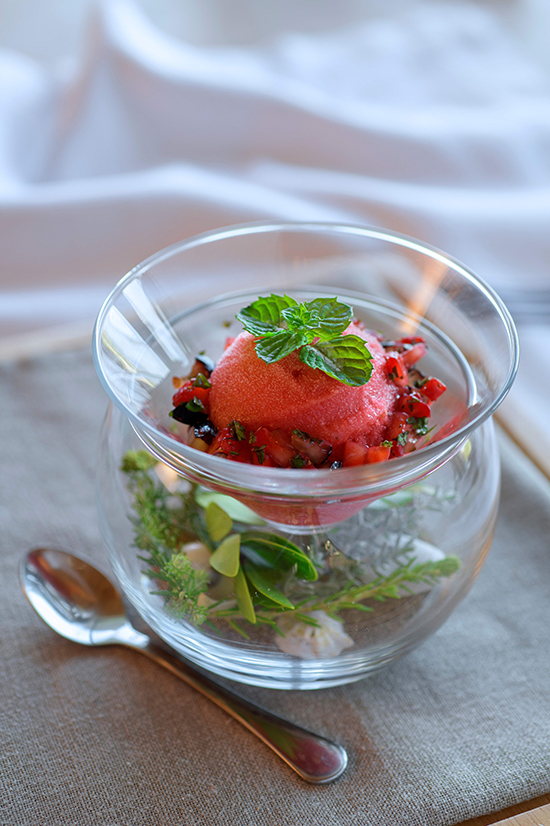
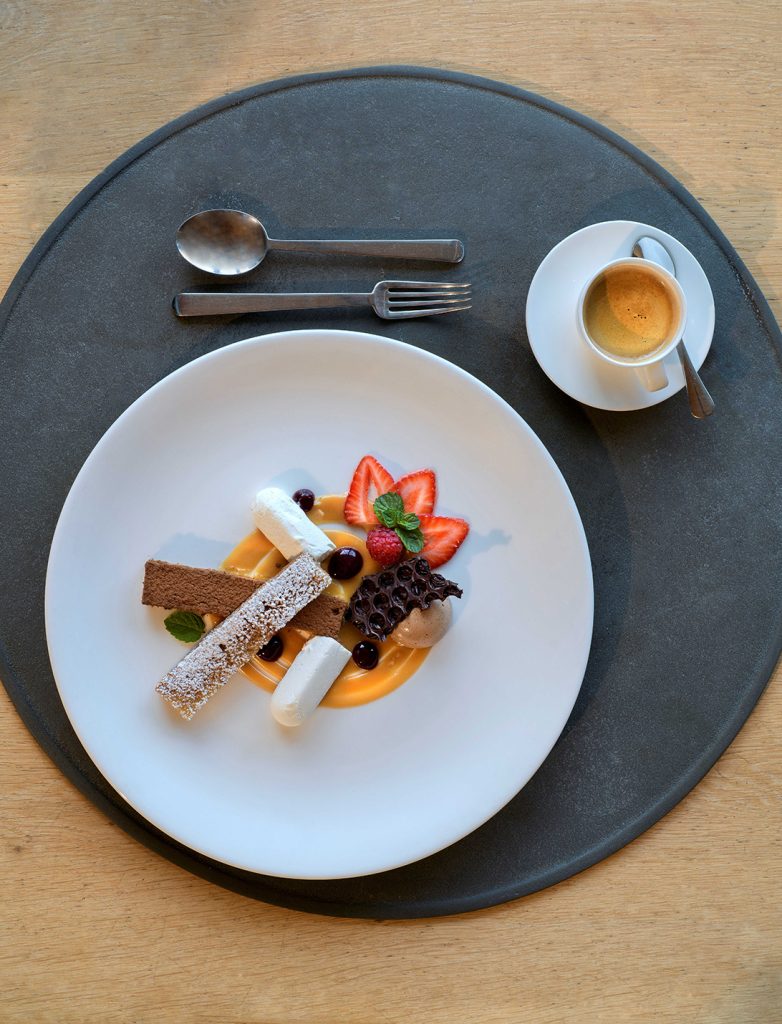
Back at the lodge, dinner was served beside a glowing fire – prawn carpaccio, fresh fish and a local cheeseboard, the table lit by hand-painted Kapula candles from nearby Bredasdorp. Later, back in our suite, we found our fireplace had been lit, and we sat quietly, reading and reflecting on the beauty of this wild coast.
Activities at Morukuru include guided nature drives, marine and fynbos walks, dune explorations, mountain biking, and excellent birdwatching. So, the next morning, after breakfast, we joined Marizelle for a marine walk. Driving past Morukuru’s other De Hoop property, Ocean House, we walked along a path through the flower-dotted veld to the beach. At Hippo Pools, a favourite swimming spot, we explored rockpools teeming with tiny fish, crabs, sea hares, starfish and flatworms.
“Sometimes we see octopus here,” said Marizelle, “and I still get as excited as a child every time.”
Lunch that day was a fragrant Malay seafood curry with a poached pear salad, followed by chocolate brownies. Afterwards, we joined a nature drive through the reserve, the air filled with the scent of flowering Blombos and the haunting song of Southern boubous.
We watched a troop of baboons feasting on dune sage and, at a nearby waterhole, a group of Blue Cranes performing their elaborate courtship dances beside a water hole. Marizelle explained that these courtship dances are vital to the survival of South Africa’s national bird, the Blue Crane, and that understanding their behaviour helps conservationists better protect the species. De Hoop also plays a crucial role in conserving bontebok, once nearly extinct but now thriving here alongside eland, zebra, and more than 260 bird species.
For the Zeemans, promoting conservation, community upliftment and sustainability is at the heart of everything. Through the Morukuru Goodwill Foundation, established in 2007, they support projects from anti-poaching and wildlife relocation to turtle rescue and fynbos restoration.
Despite its protected status, De Hoop is not immune to marine litter. Morukuru’s “Plastic for Coffee” initiative invites guests at Bites Beach Café to collect beach litter in exchange for a cup of coffee. They also organise an annual beach clean-up every May, and in this year, the team collected more than 50 kgs of litter. Plastic ingestion and entanglement remains one of the greatest threats to sea turtles and other these marine creatures.
The Foundation also supports turtle rehabilitation through the Two Oceans Aquarium Turtle Conservation Centre, funding care for rescued loggerhead and green turtles – Kai, Nori and Habanero, with the goal of releasing them back into the ocean here at De Hoop. Bheni was one of the first se turtles they sponsored a satellite tag for, and his journey can be followed here: Celebrating Bheni, the Green Turtle, released at De Hoop Nature Reserve – Morukuru Family.
Earlier this year, the Foundation partnered with the Landmark Foundation and CapeNature in a leopard conservation initiative to monitor leopards and other mammals in the De Hoop Nature Reserve using state-of-the-art camera trap stations – more than 20 of the planned 31 have already been installed. Guests are able to join the team on these camera inspections, offering a unique opportunity to be part of research in action. Recent footage of a caracal mother and her kitten caused great excitement among rangers and visitors alike.
Leopard Sightings in De Hoop Nature Reserve
Exciting news from the Landmark Leopard & Predator Project camera trap survey, proudly supported by the Morukuru Goodwill Foundation:
- Since May 2025, 22 leopard images (0.2% of total captures) have been recorded across 14 of 21 camera stations in De Hoop.
- Two male leopards have been identified so far – one recognisable by a distinctive lip scar (likely from a past encounter), and another detected near Infanta, showing minimal territorial overlap.
- A 2012 survey recorded five leopards within De Hoop, and this new study aims to compare current leopard density with those earlier results.
- De Hoop is a key refuge for leopards and other predators, and findings like these inform proactive conservation strategies – including the creation of ecological corridors to ensure long-term survival and ecosystem health.
On our final morning, after an early swim at Hippo Pools, we stopped for fish and chips at Bites Beach Café, a restored fisherman’s cottage nestled among the dunes. Watching whales breaching offshore, I couldn’t imagine a more perfect farewell.
As we left De Hoop, I looked out once more at the dunes, fynbos and sea. The whales were still there, moving slowly through the blue expanse, timeless and unhurried.
Essentials:
Where to stay & what to do:
QR code – https://morukuru.com/locations/de-hoop-nature-reserve/
"Southern Africa reveals itself slowly and rewards patience with moments of extraordinary grace."

